Walkabout Mini Golf: Performance on Quest 1, 2, and 3
Every course I've worked on, from Labyrinth to today, had to look like a Walkabout course on a standalone headset. The art ambition stayed the same while the hardware changed under it. These cases are about the decisions behind that: what we baked, what we cut, what we kept, and how we kept artists thriving.
Quest 1: the floor
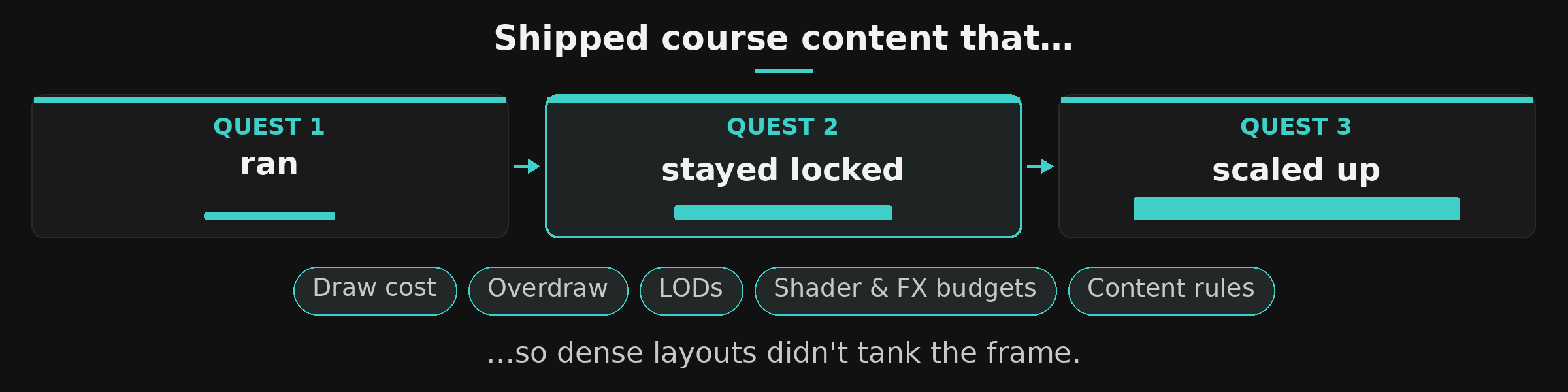
Early on, every course still had to run on Quest 1. That meant hard rules for everyone: tight draw budgets, careful overdraw on big views, aggressive LODs, and shaders that did as little as possible per pixel. The job was keeping a course looking good under those limits, not just making it run. We pulled as much as we could from old-school game dev techniques to make visuals that “faked” a look we were going after.
Journey to the Center of the Earth DLC was one of the hardest ships before Quest 1 was dropped. We already had a complex plan to make shader lights work in VR to fake flashlights but also needed that to work on Quest 1. We ended up shipping separate shaders just for Quest 1 at the time that still got the majority of the visuals across without sacrificing the story intent of any of the visuals. My goal when I started at Mighty Coconut was to make sure the min spec player had the same if not VERY similar experience as the player on the latest headset with 2x or 3x the power.
Quest 2: room to push, still a budget
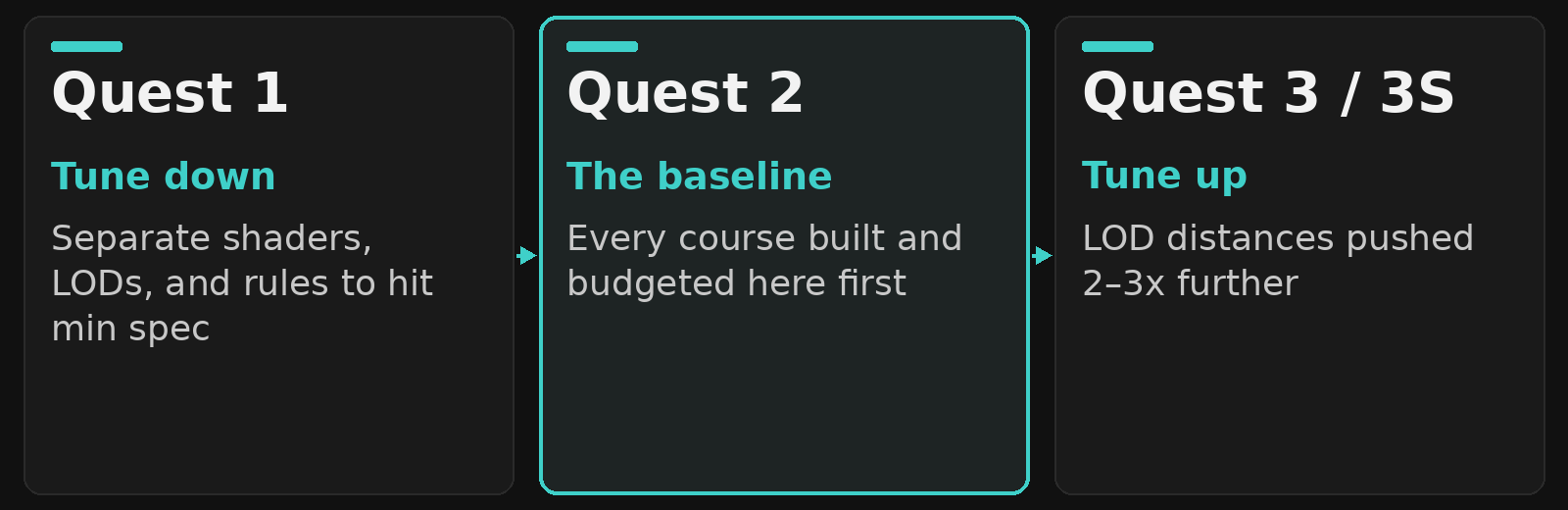
When I started we had to optimize for just Quest 1 and Quest 2 and often we would target Quest 2 for our baseline and then try as much as we could to pull it back even further for Quest 1. We knew that Quest 2 would be the headset that would outsell Quest 1 and could be our player base so we made sure their experience was the standard. Often we had to make separate shaders, LODs, triggers, and different optimizations that only applied to Quest 1 to get it to run. My skills were sharpened by the challenge of getting visuals tuned to look great on Quest 2 to look good and still perform on Quest 1.
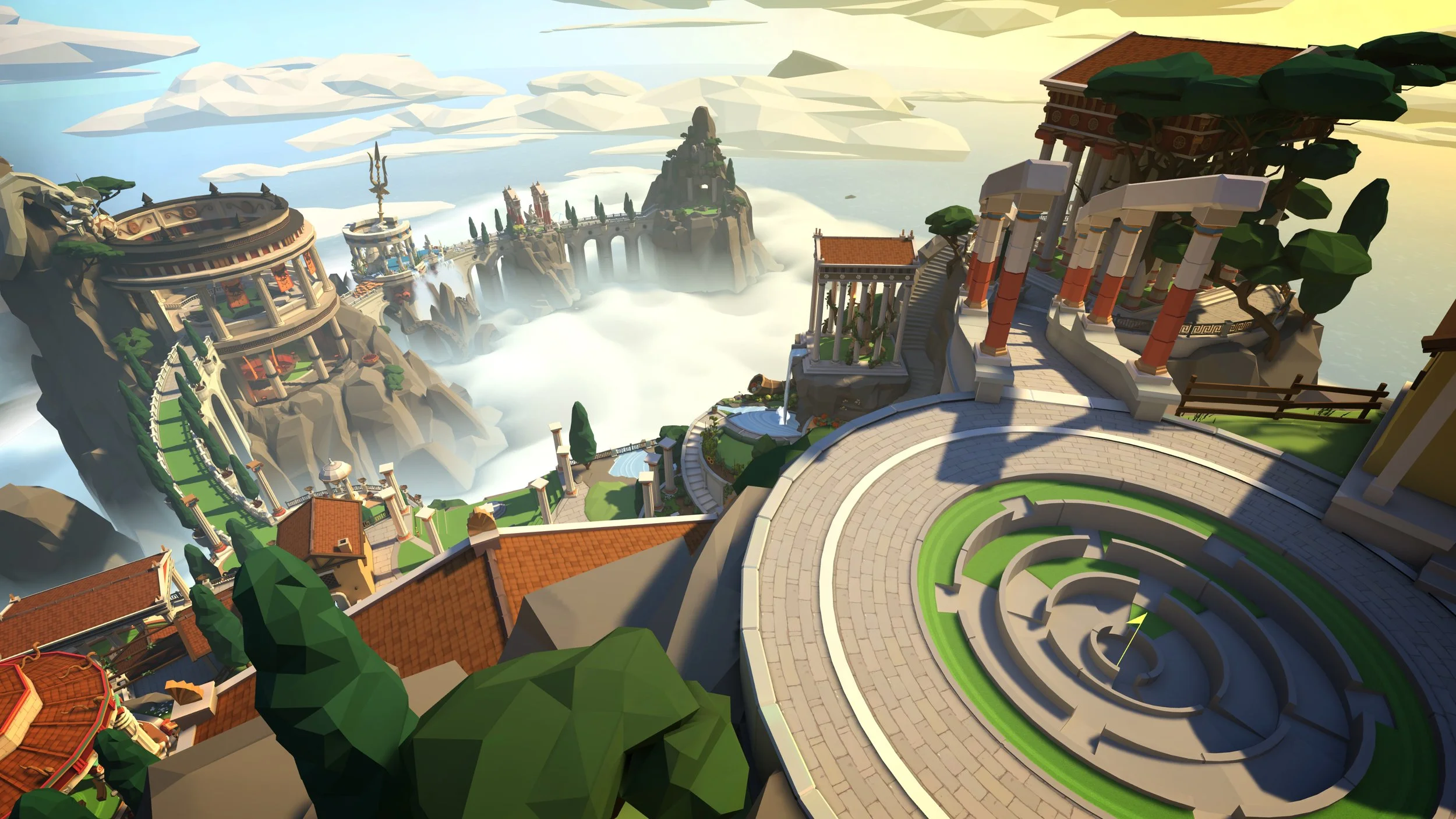
Once Quest 1 was off the target, the content rules loosened, but they didn't go away. Quest 2 still was our target for both visuals and performance. Mount Olympus pushed what Quest 2 and our internal constraints could do at the time, with dense architecture, big vistas, and art direction that wanted more weight than a typical hole. We tightened content and LOD rules with the art team, simplified the expensive pieces that didn't read in play, and kept the big moments. It shipped, but it was a pivotal point: we pushed past what Quest 2 could comfortably handle and started to see the limits of the Quest 3 hardware.
Quest 3: more headroom, same discipline
Quest 3 and Quest 3S came onto the scene around the same time and started to show how well our previous guidelines and assumptions worked on those platforms, but also gave us extra headroom to start playing with. In most cases we were able to push the LOD distances further out for each course 2x and 3x the length of where LODs were at on Quest 2. However, Quest 2 was still the single target to get the game to work. Much like we targeted Quest 2 and tuned “down” for Quest 1, we now target Quest 2 and tune “up” for Quest 3 and above (PCVR).
All along as Meta changed their hardware OS and also played with performance gains, it became an issue where our target was now moving from month to month. Thankfully with our 6-8 week release cadence we could get ahead of that to make sure our players never saw any hiccup. With the release of the Quest 3 and then cheaper Quest 3S, we got access to a wider band of GPU budget we could then finally start to leverage in a game we already were pushing the boundaries with.
At the end of the day, tri count was always the biggest tug-of-war between the art/vision and performance.
How I approach this challenge

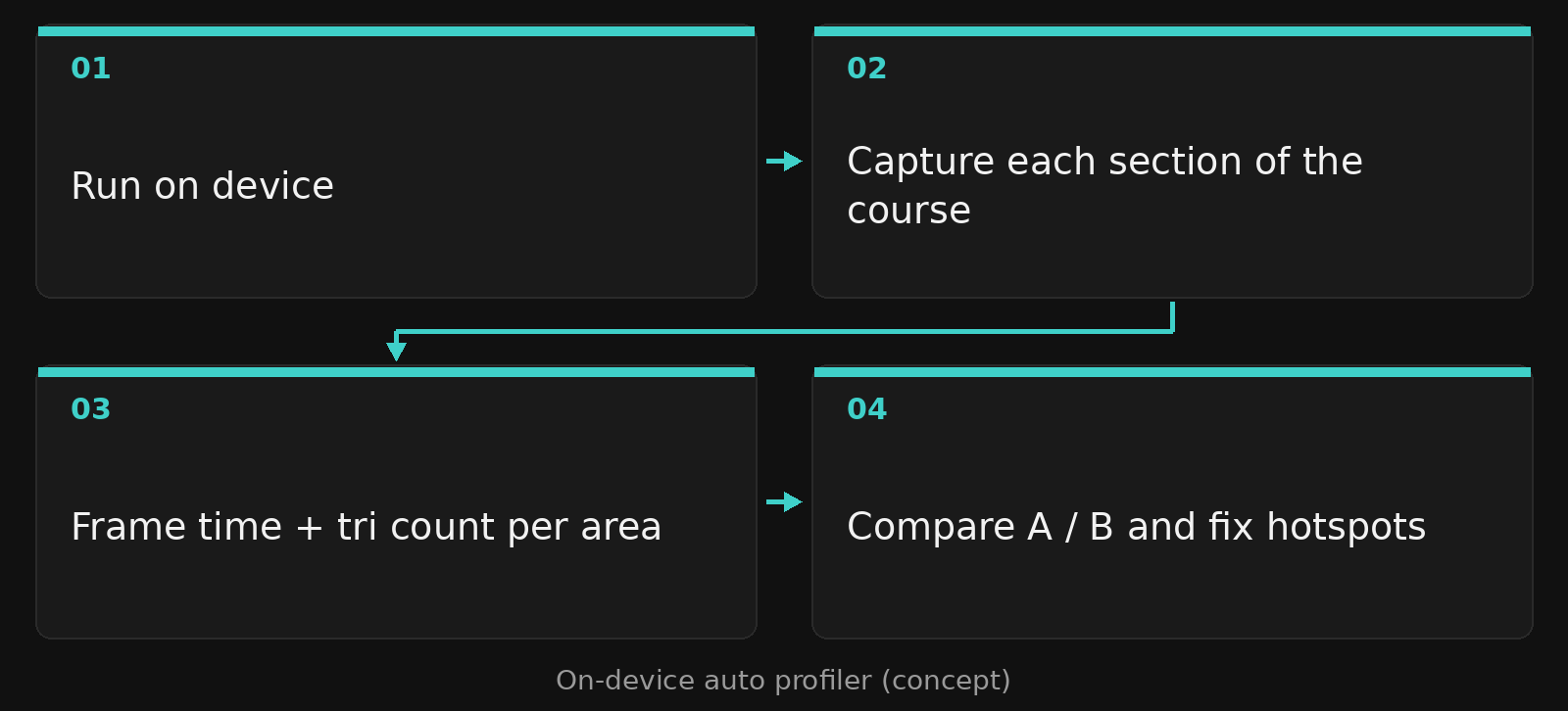
Each new course shipped every 6–8 weeks, so performance couldn't be a cleanup pass at the end. I built it into the content rules from the start: merge meshes to cut draw calls, keep lightmap groups separate so the bake stays clean, and hold shader and FX budgets per headset tier. When a course still ran heavy, the on-device auto-profiler, OVR Metrics and Perfetto captures showed us exactly where the frame was going, often on the CPU side, and we fixed it before release.
A lot of this comes from my earlier work on mobile and Nintendo Switch, where every millisecond counts. The goal is always the same: dense, beautiful courses that hold a locked frame rate on every headset we ship on.